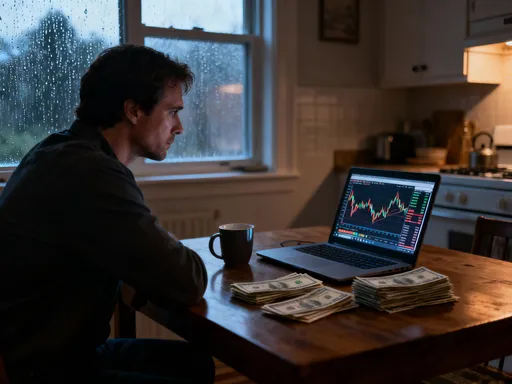
Why Chasing Market Trends Almost Wrecked My Finances
I used to think following hot market trends was the fastest way to grow my income. I jumped into every next big thing — from crypto crazes to meme stocks — believing I was being smart. Instead, I burned cash, stressed constantly, and barely broke even. What I learned the hard way? Real financial growth isn’t about chasing hype. It’s about seeing through the noise, avoiding emotional traps, and building steady, smart habits. Let me share what actually works. The journey to financial stability isn’t flashy, but it’s far more reliable than betting on viral moments. This is the truth many don’t talk about until they’ve paid the price in stress, lost savings, and missed opportunities. Financial peace comes not from catching the latest wave, but from creating a foundation that stands firm no matter what the market does.
The Allure of the Fast Track: Why We Fall for Trendy Income Streams
The promise of fast income is powerful, especially when it’s wrapped in the glow of social proof and digital excitement. Every day, headlines trumpet record-breaking stock surges, overnight crypto millionaires, and influencers flaunting luxury purchases funded by speculative bets. For many, particularly those managing household budgets and long-term financial goals, these stories feel like missed chances. The fear of missing out — commonly known as FOMO — is not just a buzzword; it’s a deeply rooted psychological trigger that overrides rational thinking. When a neighbor mentions doubling their money in a week or a popular podcast highlights a 'can’t-miss' investment, the pressure to act builds quickly. This emotional momentum makes trend-based investing feel like a smart move, when in reality, it often resembles gambling disguised as strategy.
Part of what makes trends so seductive is the way they’re presented. Social media platforms amplify success stories while burying the far more common tales of loss. A single viral post showing a $50,000 profit from a meme stock doesn’t reflect the thousands who bought in too late and lost half their investment. Yet, the brain latches onto the possibility, not the probability. This skewed perception is further fueled by the way financial news cycles operate — they thrive on drama, speed, and novelty. As a result, slow, steady wealth-building strategies like saving, budgeting, and long-term investing are overshadowed by the allure of instant gains. The reality is that most people drawn to trending investments aren’t chasing financial literacy; they’re chasing relief — relief from financial stress, from feeling behind, or from the burden of making careful, unexciting decisions.
What many fail to recognize is the fundamental difference between speculation and sustainable income growth. Speculation relies on price movement — the hope that someone else will pay more for an asset later. Sustainable growth, on the other hand, comes from income-producing assets, disciplined saving, and compounding returns over time. When you invest in a dividend-paying stock, a rental property, or a side business with consistent demand, you’re building a system that generates value regardless of market mood. Trend chasing, by contrast, depends entirely on timing and sentiment — two things no one can predict reliably. The emotional high of seeing a portfolio spike during a rally is real, but so is the crash that follows when the hype fades. Recognizing this distinction is the first step toward making choices based on logic, not emotion.
Mistaking Noise for Opportunity: When Trends Mask Real Risk
One of the most dangerous aspects of market trends is how they disguise risk as opportunity. When an asset’s price is rising rapidly, it’s easy to interpret that movement as proof of value. But in many cases, the surge is driven not by fundamentals, but by momentum — people buying because others are buying. This creates a feedback loop where rising prices attract more buyers, pushing prices even higher, until the cycle reverses. The investors who enter late — often drawn in by media coverage or peer enthusiasm — are the ones most vulnerable to losses. They see the climb and assume it will continue, failing to ask why the price is rising or whether the underlying asset has real, lasting worth.
Consider the example of a popular cryptocurrency that doubles in value over a few weeks. News outlets run features on early adopters who became millionaires. Social media fills with testimonials from people celebrating their gains. A family investor, hearing these stories, decides to allocate a portion of their savings to the coin. What they don’t see is that the price has already surged past its intrinsic value — if it has one at all. There’s little regulation, no earnings, and no cash flow to support the valuation. The only way to profit is to sell to someone else at a higher price. When the trend slows and selling begins, the price can collapse just as quickly as it rose. The latecomer, who believed they were seizing an opportunity, now faces a steep loss with no clear recovery path.
This misjudgment of risk is amplified by the way financial information is shared today. Platforms prioritize engagement, so content that’s exciting, urgent, or emotionally charged gets more visibility. Calm, cautious analysis rarely goes viral. As a result, volatility — a key indicator of risk — is often downplayed or even celebrated as a sign of 'potential.' But high volatility means uncertainty, and uncertainty means danger for those without the time, knowledge, or risk tolerance to withstand sharp swings. When a market trend makes risky behavior look safe, it creates a false sense of security. The real danger isn’t the asset itself, but the belief that you can time the market perfectly — buying at the right moment and selling before the fall. History shows that even professional investors struggle with this. For the average person managing household finances, the odds are even less favorable.
The Hidden Cost of Reacting: How Timing Kills Returns
One of the most overlooked factors in personal finance is timing — not just when you invest, but how your emotions influence that timing. Most people don’t buy at the bottom and sell at the top. Instead, they buy after prices have already risen, driven by excitement and FOMO, and sell during downturns, gripped by fear. This pattern — buying high and selling low — is the exact opposite of sound investing, yet it’s incredibly common. The cost of this behavior isn’t always visible in daily statements, but over time, it erodes wealth in a quiet, relentless way. What feels like proactive decision-making often turns out to be reactive damage.
Imagine two investors: one who began regularly investing in a diversified index fund five years ago, adding a fixed amount each month regardless of market conditions, and another who waited until the market hit a peak, spurred by news of record highs. The first investor benefits from dollar-cost averaging — buying more shares when prices are low and fewer when prices are high — which smooths out volatility and reduces risk. The second investor, entering at a high point, locks in an expensive average cost. When the market corrects, their portfolio drops significantly, and the emotional toll may lead them to sell at a loss. Even if the market eventually recovers, the late investor may never regain their confidence — or their capital. The difference in outcomes isn’t due to intelligence or access, but to discipline and timing.
Emotional cycles play a major role in this destructive rhythm. The cycle typically begins with optimism, fueled by positive news and rising prices. Then comes greed, as investors chase higher returns. Eventually, fear takes over when prices fall, leading to panic selling. Finally, despair sets in, and many abandon the market altogether — only to re-enter during the next upswing, repeating the cycle. Breaking this pattern requires awareness and structure. Without a clear plan, it’s nearly impossible to resist the pull of the crowd. The hidden cost of reacting to trends isn’t just financial; it’s psychological. Each loss chips away at confidence, making future decisions harder and increasing the temptation to seek quick fixes. The solution isn’t to avoid the market, but to engage with it on your own terms — through consistent, unemotional actions that don’t depend on predicting the next big move.
Income vs. Illusion: Separating Real Gains from Paper Profits
One of the most common financial traps is mistaking paper profits for real income. When the value of an investment goes up on a screen, it feels like wealth has been created. But until that gain is realized — by selling the asset and securing the proceeds — it remains theoretical. Many people fall into the habit of spending or planning around unrealized gains, treating a rising portfolio balance as if it were cash in the bank. This can lead to dangerous financial decisions, such as taking on debt, making large purchases, or reinvesting based on inflated values. When the market shifts, those paper gains can vanish, leaving behind real obligations and financial strain.
Consider the case of someone who invested $10,000 in a volatile stock that later showed a $15,000 value on their brokerage app. Excited by the 150% gain, they decide to use the 'profit' as a down payment on a home renovation. But if they haven’t sold the stock, that $15,000 isn’t accessible. To get the cash, they’d have to sell — and if they do so during a downturn, they might only receive $8,000. Now, they’re funding a $15,000 project with $8,000, creating a $7,000 shortfall. The illusion of wealth led to a real financial gap. This scenario is more common than many realize, especially during bull markets when account balances swell and confidence grows. The danger lies in confusing valuation with liquidity — the ability to turn assets into spendable cash without loss.
Real income, by contrast, is measurable, consistent, and spendable. It comes from sources like dividends, interest, rental payments, or business profits — cash flows that don’t depend on selling an asset at a higher price. These forms of income can be budgeted, saved, or reinvested with confidence because they are not tied to market sentiment. A $500 monthly dividend check is real money, regardless of what the stock market does tomorrow. Building a portfolio focused on income generation, rather than price appreciation alone, shifts the focus from speculation to sustainability. It allows investors to benefit from growth while also receiving tangible returns. Over time, reinvesting these earnings can compound significantly, creating a self-reinforcing cycle of wealth that doesn’t rely on timing the market or chasing trends.
Building Resilience: Strategies That Outlast Trends
True financial resilience doesn’t come from catching the next big wave — it comes from building a foundation that endures regardless of market conditions. One of the most effective ways to achieve this is through dollar-cost averaging, a strategy that involves investing a fixed amount at regular intervals, such as monthly or quarterly. This approach removes the need to time the market, as purchases occur consistently whether prices are high or low. Over time, this leads to a lower average cost per share and reduces the impact of volatility. For a busy parent or someone managing household finances, this method offers simplicity and peace of mind — no need to monitor daily fluctuations or make high-pressure decisions.
Another cornerstone of resilient investing is asset allocation — dividing your portfolio among different types of investments, such as stocks, bonds, real estate, and cash equivalents, based on your goals, time horizon, and risk tolerance. A well-balanced portfolio is less likely to suffer catastrophic losses during market downturns because not all asset classes move in the same direction at the same time. For example, when stocks fall, bonds often hold their value or even rise, providing a buffer. This diversification doesn’t eliminate risk, but it manages it in a way that aligns with long-term stability. Adjusting your allocation as you age or as your financial situation changes ensures that your investments stay in sync with your needs.
Equally important is focusing on income-producing assets. Instead of chasing stocks that only rise in price, consider those that pay regular dividends — a portion of a company’s profits distributed to shareholders. Dividend investing offers a dual benefit: potential long-term appreciation and a steady stream of cash. Similarly, real estate investments can generate monthly rental income, and side businesses with reliable customer demand can provide supplemental earnings. These sources create a financial cushion that isn’t dependent on market sentiment. Even if stock prices fluctuate, the income continues. This shift — from hoping for gains to earning them — is what transforms investing from a gamble into a strategy. It’s not about getting rich quickly; it’s about building a life where money works for you, not the other way around.
Smarter Habits, Stronger Results: Practical Moves for Real Growth
Long-term financial success isn’t built on dramatic moves, but on consistent, everyday habits. One of the most powerful is tracking spending. Simply knowing where money goes each month creates awareness and opens the door to better choices. Using a basic budgeting app or even a spreadsheet, a household can identify areas to reduce expenses — such as dining out, subscriptions, or impulse purchases — and redirect those funds toward savings or debt repayment. This small act of awareness compounds over time, freeing up cash for more meaningful goals.
Another essential habit is setting up automatic savings and investments. By scheduling transfers to a savings account or brokerage on payday, you ensure that saving happens before spending. This 'pay yourself first' approach removes willpower from the equation and makes building wealth a default action. Whether it’s $50 or $500 per month, consistency matters more than size. Over ten years, even modest contributions can grow significantly, especially when invested in low-cost index funds that track the broader market.
Regularly reviewing financial goals — quarterly or annually — helps keep plans on track. Life changes: children grow, incomes shift, priorities evolve. A plan that made sense five years ago may no longer fit. Taking time to reassess ensures that investments, insurance, and savings strategies remain aligned with current needs. It also provides an opportunity to celebrate progress, which reinforces positive behavior.
Finally, learning to filter financial news critically is a crucial skill. Not every headline requires action. Many stories are designed to provoke emotion, not inform decisions. Developing the habit of pausing before reacting — asking whether a piece of news affects your long-term plan — protects against impulsive moves. Over time, these small disciplines add up. They don’t generate overnight windfalls, but they build a financial life that is stable, predictable, and under your control.
Staying Grounded in the Long Game: Why Patience Beats Hype
In a world that rewards speed and visibility, patience is one of the most underrated financial virtues. The truth is, lasting wealth is rarely the result of a single brilliant move. It’s the product of repeated, disciplined actions — saving a little each month, reinvesting dividends, avoiding emotional trades, and staying the course through market ups and downs. The excitement of trend chasing fades quickly, but the quiet progress of consistent effort compounds into something far more valuable: financial security.
Reframing success is key. Instead of measuring progress by viral moments or sudden gains, focus on stability, predictability, and control. Ask not 'How much did I make this month?' but 'Am I closer to my goals than I was a year ago?' This shift in perspective reduces the temptation to chase what’s popular and strengthens commitment to what works. It’s not about missing out — it’s about opting in to a smarter, more sustainable path.
Lasting income growth doesn’t come from following the crowd. It comes from building systems — personal financial systems — that function independently of market noise. It means choosing discipline over drama, consistency over chance, and long-term vision over short-term thrills. When you stop trying to time the market and start focusing on time in the market, you unlock the real power of compounding. The most reliable wealth isn’t made in days or weeks — it’s built over years and decades, one thoughtful decision at a time. That’s not just financial wisdom. It’s freedom.